An Olympic final in the capital of the country that had ruled India for 200 years, against that very country. And on the other side, a team that had been free for only a year and had been torn in half by Partition. This is the story of 12 August 1948.
Chapter 1A team split by Partition
India won independence in 1947, but Partition divided more than land. Several of the hockey team’s best players went across the new border. The side that had won three straight Olympic golds, in 1928, 1932 and 1936, had to be rebuilt almost from scratch.
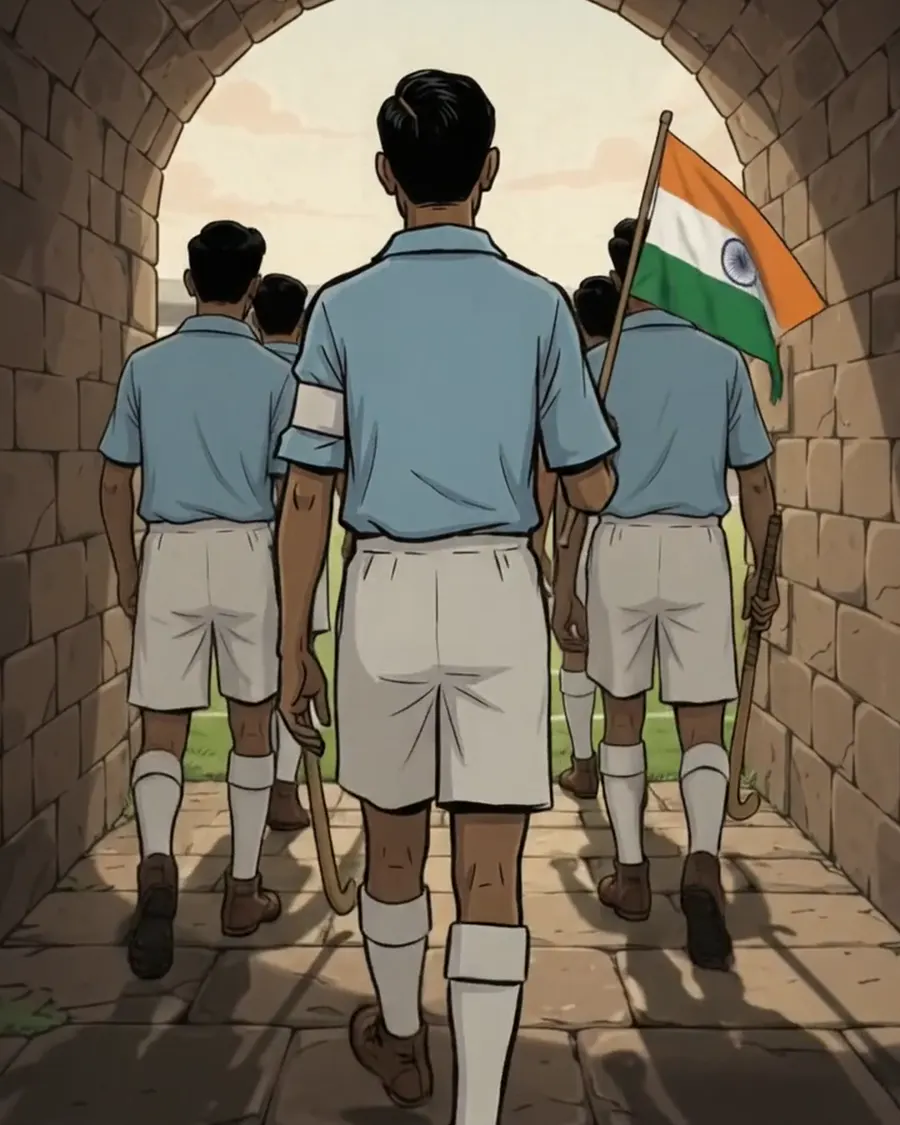
The new team reached London under captain Kishan Lal. In it was a young man named Balbir Singh, who would go on to be counted among the greatest centre-forwards the game has seen.
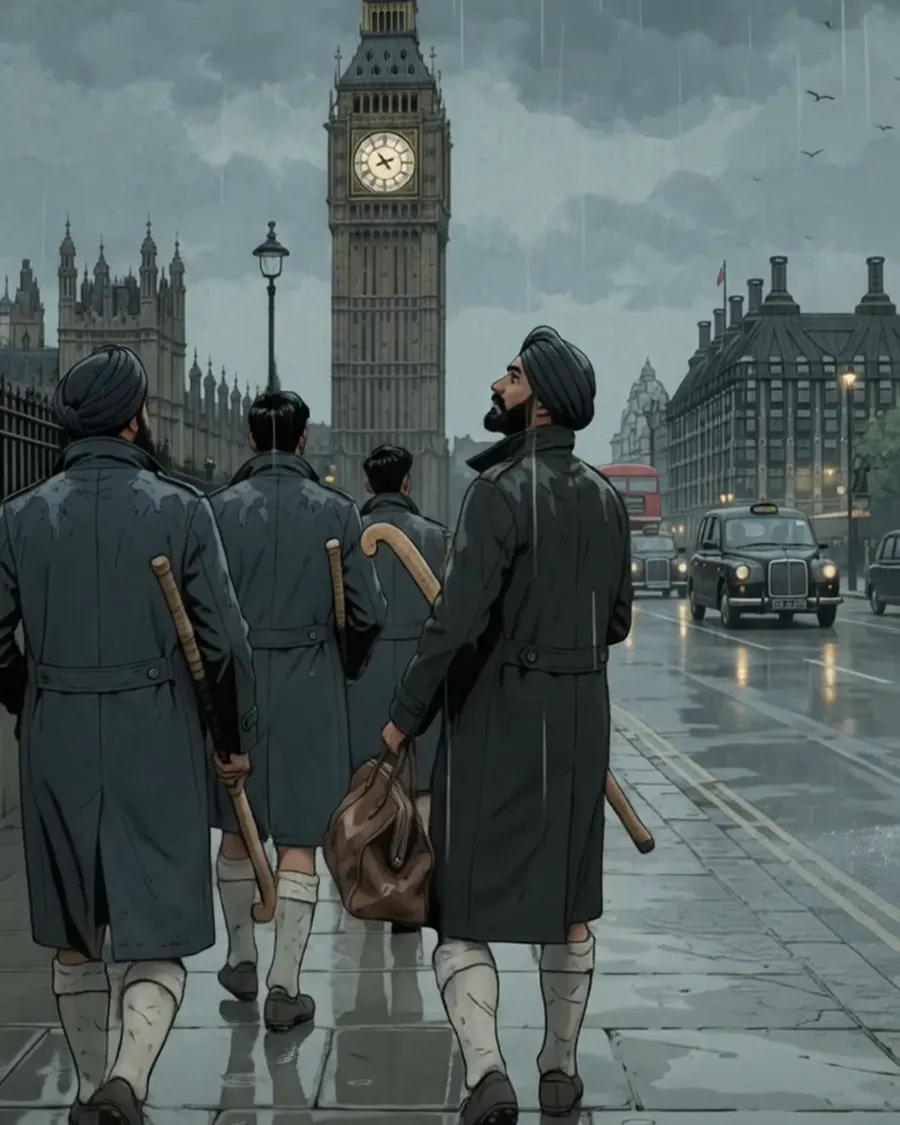
Chapter 2The top scorer on the bench
Surprisingly, Balbir Singh sat out most of the early matches. Indians living in London raised their voices, and he was finally sent on. He started scoring almost immediately.
The team’s greatest player… was sitting on the bench.
Chapter 3Wet grass at Wembley
12 August 1948. Wembley Stadium. Rain had turned the pitch to mud. Opposite them: Great Britain, with a home crowd and home conditions. It is said that some Indian players took off their boots and played barefoot for better grip on the slippery turf.
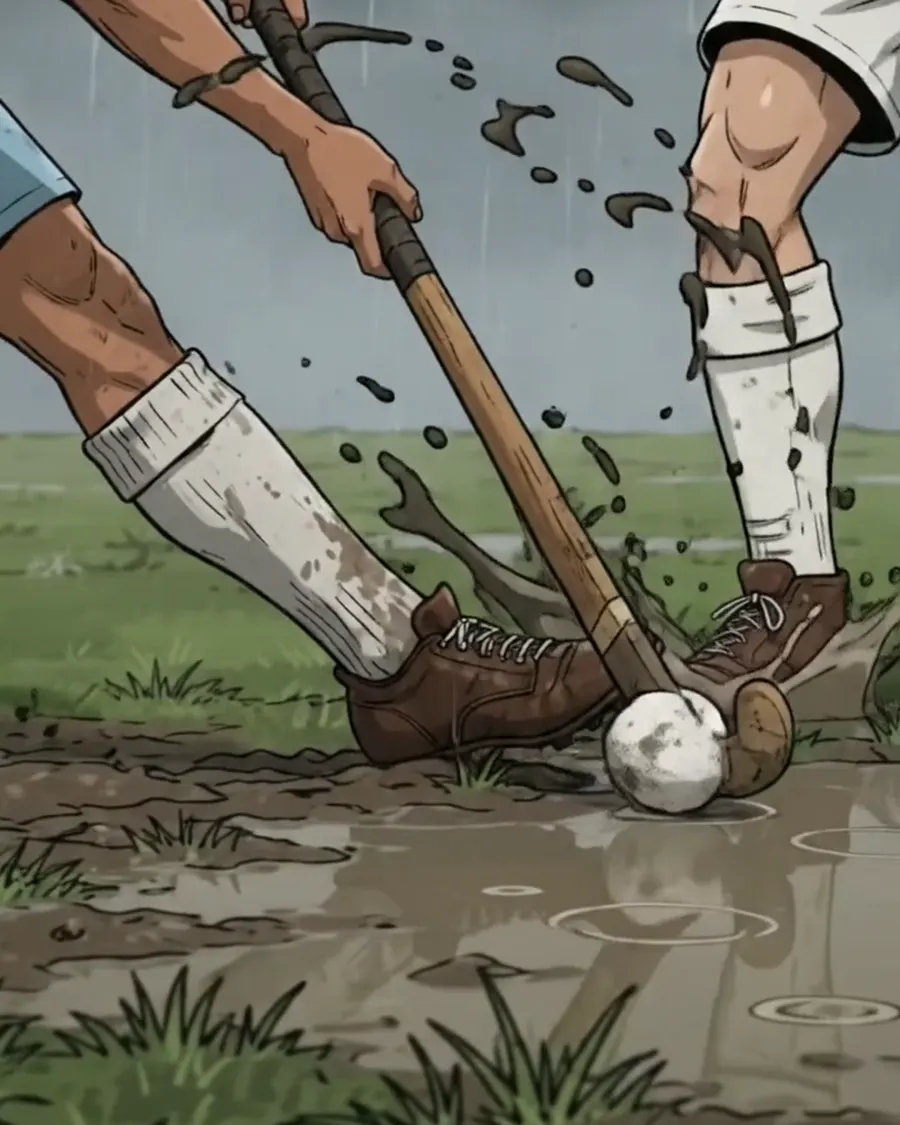
The result: India 4, Great Britain 0. Balbir Singh scored twice in the final. When the whistle blew, Indians in the stands wept.
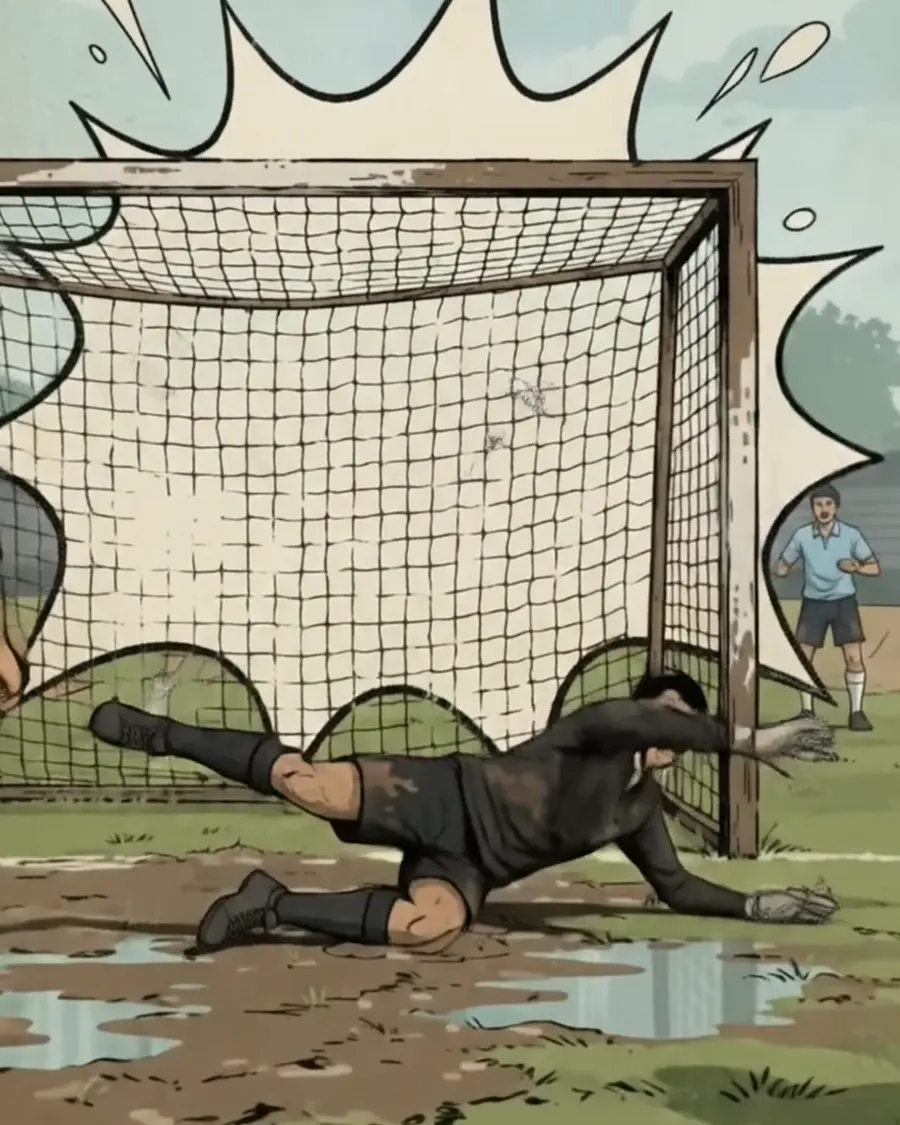
Chapter 4When the Union Jack flew lower
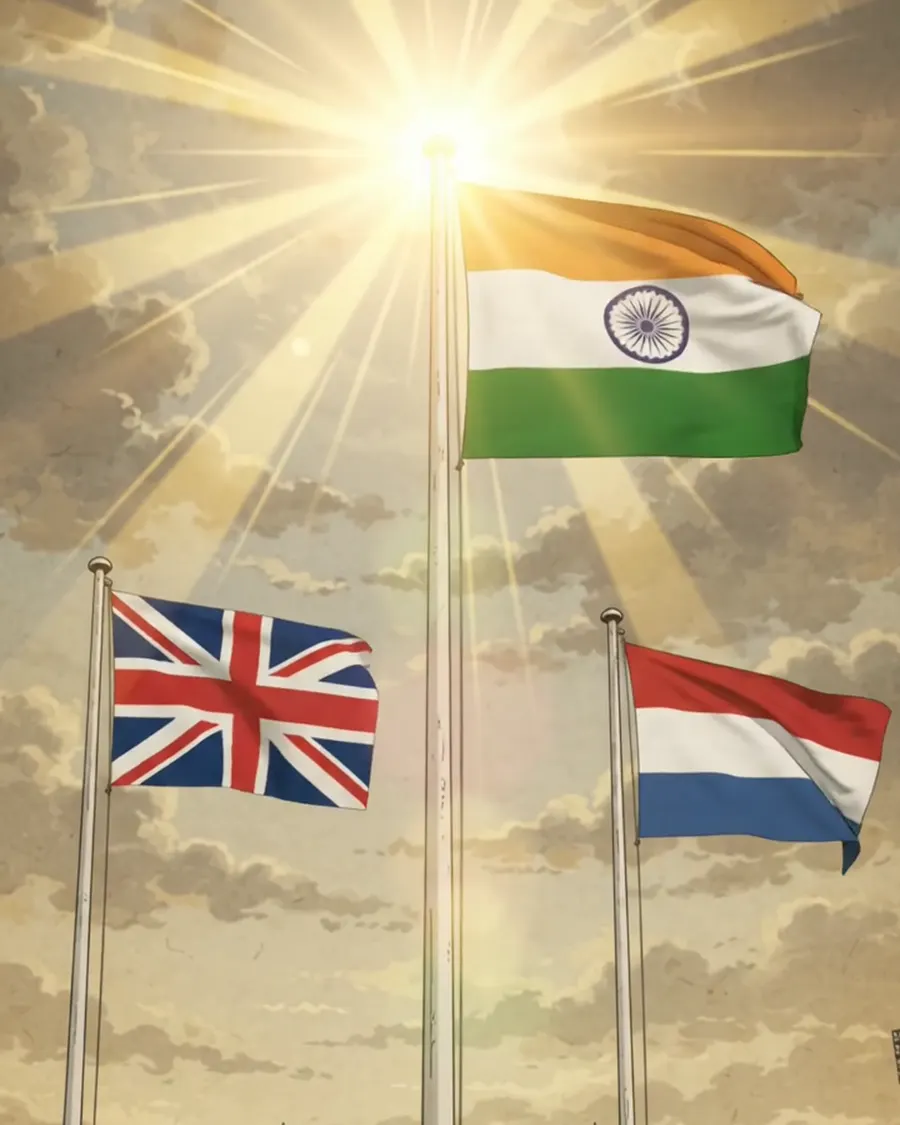
At the medal ceremony, free India’s tricolour rose to the top of the Olympic flagpoles for the first time, with the British flag below it. After 200 years of colonial rule, that image was an answer in itself.
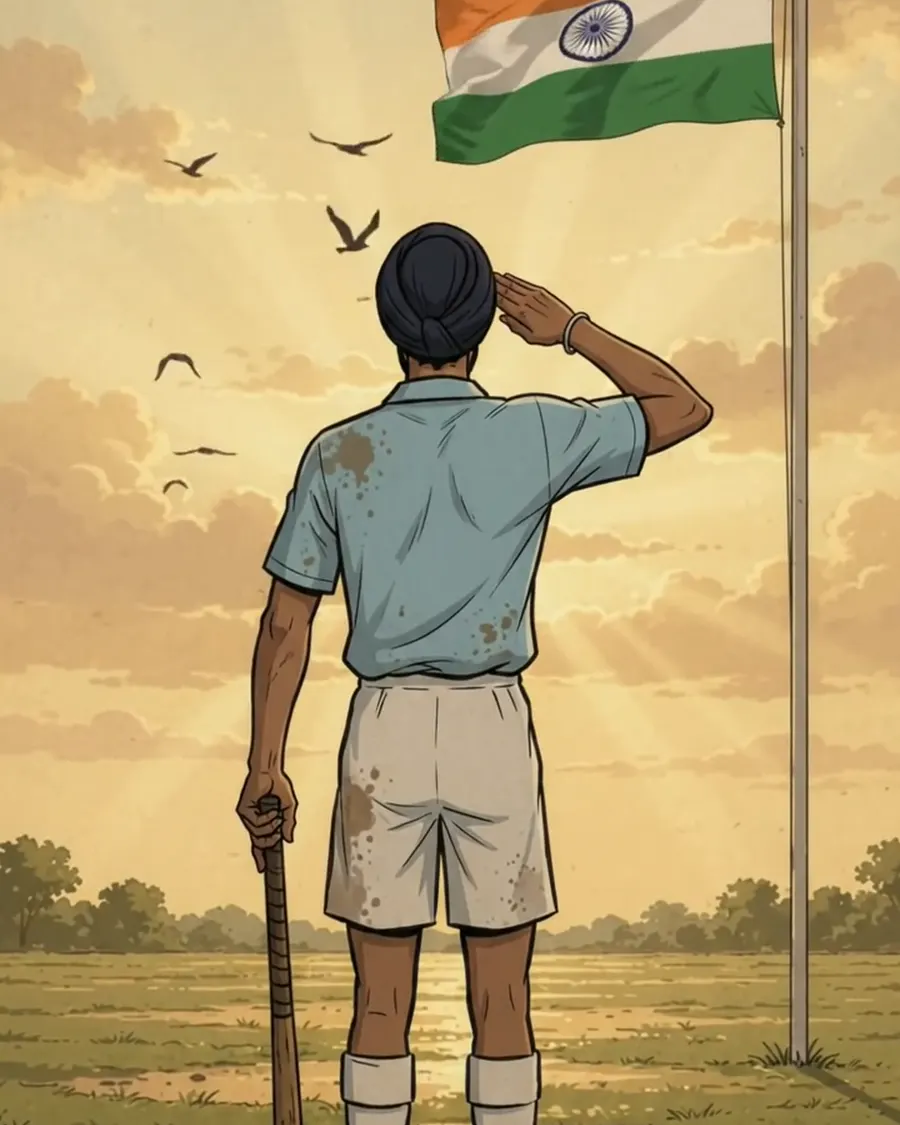
That day, Britain’s flag stood beneath India’s.
Balbir Singh went on to win gold again in 1952 and 1956. His five goals against the Netherlands in the 1952 final remain the record for most goals by a man in an Olympic hockey final. But that afternoon in 1948 was different, because it was about far more than a match.
For more stories like this… follow Maidan Katha